
For a long time, public relations performance measures focused almost exclusively on visibility: how many times the brand appeared, in which outlets, and with what tone. And although those indicators are still relevant, they are no longer enough. Organizations now demand clarity on how that visibility translates into action, influence, and business results.
At InfoSol, we believe strategic communication must demonstrate tangible value. That’s why we’ve adopted a measurement approach that combines international communication-evaluation frameworks (the Barcelona Principles and the AMEC Integrated Evaluation Framework) with digital and performance metrics capable of connecting reputation to conversion.
Did you know…?
78% of companies that measure PR KPIs optimize their campaigns and improve their online reputation in less than a year, relying on trustworthy data and analysis, according to a global report by Cision and PRWeek.
Beyond clipping: the challenge of measuring what truly matters
The Barcelona Principles 4.0, promoted by AMEC, provide a clear roadmap for evaluating an organization’s communication efforts. Instead of relying on outdated metrics such as AVE (Advertising Value Equivalency), these principles emphasize:
- Setting clear, measurable objectives
- Measuring outcomes and benefits—not just activities
- Combining qualitative and quantitative indicators
- Connecting communication efforts to real organizational objectives
However, even this framework can fall short when it’s not integrated with a digital and performance mindset capable of linking influence to purchase intent and, eventually, conversion — a connection that requires public relations performance measures and evaluation indicators that reflect real organizational impact.
The InfoSol model: reputation + intent + conversion
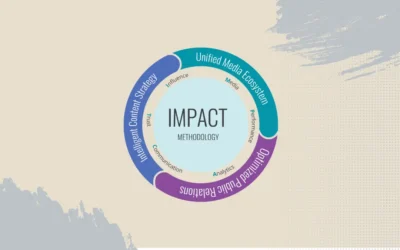
Our measurement model is structured around three complementary dimensions that comprehensively evaluate communication execution, influence, and strategic contribution.
These 11 metrics are essential to ensure methodological consistency and comparability over time, integrating international measurement standards (Barcelona Principles 4.0) with analysis adapted to today’s digital environment.
1. Visibility and strategic execution
This first level evaluates the quality of communication execution and its alignment with defined strategic objectives.
- Strategic media presence (coverage in priority outlets)
- Active spokesperson positioning and leadership (interviews + bylines)
- Editorial quality of coverage
2. Digital impact and user behavior
This level measures influence within the media conversation and relative positioning against key competitors.
- Competitive share of voice
- Share of impact
- Editorial tone
- Integration of strategic messaging
3. Connection to business objectives (performance)
The third dimension connects reputation with digital performance, measuring how editorial influence strengthens organic authority and visibility across search environments.
- High-quality editorial backlinks
- SEO positioning for key topics
- Visibility in AI-driven search engines
- Referral traffic from media coverage
Here we demonstrate how performance measurement metrics enhance strategic visibility through authoritative content.
Because clients are no longer satisfied with knowing how many articles were published. They want to understand whether the audience listened, reacted, and acted. In an environment where purchase decisions begin on Google, AI-generated responses, or social platforms, a PR campaign’s ability to influence digital conversations and search behavior is essential.
Why this approach is necessary today
Because clients want more than coverage numbers—they want to know whether the audience listened, reacted, and acted.
In a world where buying decisions begin on Google or social platforms, a PR campaign’s ability to influence digital conversations and search behavior is essential.
Measuring is more than counting
At InfoSol, we don’t rely on reporting alone—we apply public relations performance measures to improve, optimize, and demonstrate the real value of communication.
Our evaluation model focuses on answering the questions that truly matter:
- What perception did we generate?
- Whom did we reach?
- What actions did we provoke?
- What results did we support?
And we do this by integrating reputation metrics with digital performance indicators, while maintaining the ethical and strategic rigor promoted by AMEC and the Barcelona Principles.
Ready to turn your public relations into measurable results?
FAQS
1. What are the most important metrics to measure results in public relations?
The most relevant metrics span visibility, perception, intent, and business contribution. They include strategic media presence, share of voice, high-quality editorial backlinks, visibility in AI-driven search engines, and referral traffic from media coverage. Together, these metrics provide a full evaluation of real impact, help optimize strategies, and demonstrate how communication supports business growth.
2. How is a professional evaluation of a public relations plan conducted?
It begins with clear, measurable objectives. Then, qualitative and quantitative indicators are analyzed across media, reputation, and digital performance. Intent signals and commercial contributions are also considered. This ensures a PR plan evaluation that goes beyond clipping and connects communication to strategic results.
3. What tools do you recommend for measuring digital reputation?
Highly effective tools include Google Search Console, social listening platforms (like Sprout Social), SEO platforms (such as Ahrefs), website analytics, and AMEC measurement frameworks. These tools help assess how perception evolves, what drives conversation, and how the brand participates in decision-making within the digital ecosystem.
Sources consulted
- AMEC Integrated Evaluation Framework
- Barcelona Principles 4.0
- PRSA: Guidelines for Communication Measurement